E-Balloting for Livestock Program Phase 2
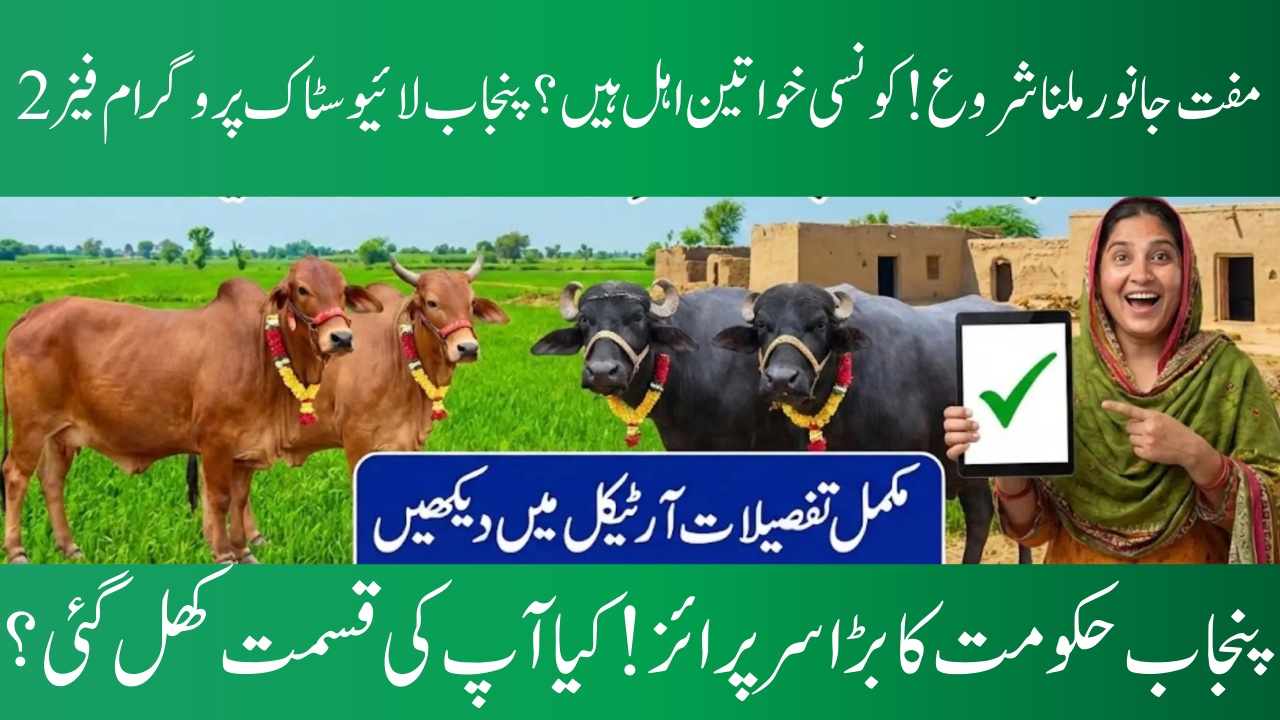
The Punjab Government has successfully completed Phase 2 of the Livestock Asset Transfer Program, a major welfare initiative worth PKR 2 billion, aimed at empowering rural women in South Punjab. The program was implemented through a transparent and merit-based E-Balloting system, ensuring that only deserving women were selected without political pressure or favoritism. This initiative reflects the provincial government’s strong commitment to poverty reduction, women’s empowerment, and rural economic development.
The E-Balloting ceremony was supervised by Provincial Minister for Livestock Syed Ashiq Hussain Kirmani and Secretary of Livestock Ahmed Aziz Tarar. The use of technology in the selection process shows how modern digital systems can improve fairness, transparency, and efficiency in public welfare programs. Under Phase 2, thousands of rural women received cows and buffaloes to help them generate sustainable income and support their families.
You can read more: Muft Atta 8070 and Free Rashan Through Ramzan Relief Package 2026
Overview of Livestock Program Phase 2
Phase 2 of the Livestock Program focuses on widowed and divorced women living in underdeveloped rural areas of South Punjab. The initiative spans 24 months (2024–2026) and is designed to provide long-term economic relief rather than short-term assistance. Selection was conducted by the Punjab Information Technology Board (PITB) through an automated E-Balloting system, ensuring equal opportunity for all eligible applicants.
To maintain fairness and accountability, the government defined strict eligibility conditions and monitoring rules. These measures help ensure that livestock assets are used productively and reach the most deserving households.
Eligibility and Monitoring Rules
-
Applicants must be widowed or divorced rural women, aged up to 55 years, with a PMT score of 32 or below
-
Livestock cannot be sold or transferred for one year and remains under monitoring for 12 months
These conditions help prevent misuse while ensuring the program delivers real economic benefits to poor families.
You can read more: 8171 Verify CNIC Online: Easy Method to Verify Your Eligibility for the BISP in 2026
Transparent E-Balloting and Use of Technology
The success of Phase 2 largely depends on the E-Balloting system developed by PITB. During this phase, more than 128,562 applications were processed digitally, and 4,870 women were selected through automated balloting. This approach eliminated human interference and significantly reduced administrative delays.
The E-Balloting system provides instant, verifiable results and ensures data accuracy. It also allows the government to scale similar programs across the province without increasing costs or manual workload. By relying on technology, Punjab has set a new standard for transparent asset distribution in social welfare initiatives.
Livestock Assets and District-Wise Distribution
The program provides high-quality livestock, including locally recognized breeds such as Sahiwal, Cholistani, Nili-Ravi, and Kundi. These breeds are suitable for local climates and offer better milk production, ensuring steady income for beneficiaries.
The distribution covers 12 districts of South Punjab, ensuring balanced regional representation and maximum outreach.
District-Wise Livestock Distribution
| District | Livestock Provided |
|---|---|
| Multan | Cows & Buffalo |
| Dera Ghazi Khan | Cows & Buffalo |
| Bahawalpur | Cows & Buffalo |
| Rahim Yar Khan | Cows & Buffalo |
| Muzaffargarh | Cows & Buffalo |
| Rajanpur | Cows & Buffalo |
| Layyah | Cows & Buffalo |
| Lodhran | Cows & Buffalo |
| Khanewal | Cows & Buffalo |
| Vehari | Cows & Buffalo |
| Bhakkar | Cows & Buffalo |
| Jhang | Cows & Buffalo |
This structured distribution ensures that women across South Punjab benefit equally from the program.
Economic and Social Benefits for Rural Women
The livestock program plays a vital role in improving the economic independence and social status of rural women. Livestock ownership allows women to earn through milk sales while also improving household nutrition. This approach reduces dependency on aid and promotes entrepreneurship at the grassroots level.
Key Benefits for Beneficiaries
-
Provides a sustainable source of income and improves household food security
-
Builds confidence, social recognition, and financial independence for rural women
By empowering women directly, the program strengthens families and contributes to long-term rural economic stability.
Government Commitment and Future Direction
The Punjab Government has reaffirmed its commitment to expanding similar welfare programs in the future. Officials have emphasized that technology-driven solutions like E-Balloting will remain central to social protection initiatives. Future phases may include broader coverage, improved monitoring, and additional training support to maximize economic impact.
This program also serves as a replicable model for other provinces seeking transparent and effective poverty alleviation strategies.
Conclusion
The Punjab Government’s Livestock Program Phase 2 is a landmark initiative that combines transparency, technology, and social welfare to empower rural women. Through fair E-Balloting and structured monitoring, thousands of deserving women received livestock assets worth PKR 2 billion. The program not only improves household income and nutrition but also strengthens South Punjab’s rural economy. This initiative sets a strong example of how digital governance can drive inclusive and sustainable development.
You can read more: Learn the Complete Guide to Poverty Score 2025 September To Receive Approval For New Payment
FAQs
1. Who is eligible for the Livestock Program Phase 2?
Widowed or divorced rural women aged up to 55 years with a PMT score of 32 or below are eligible.
2. How were beneficiaries selected?
Beneficiaries were selected through a transparent E-Balloting system managed by the Punjab Information Technology Board.
3. Can beneficiaries sell the livestock immediately?
No, livestock cannot be sold or transferred for one year, and beneficiaries are monitored for 12 months.