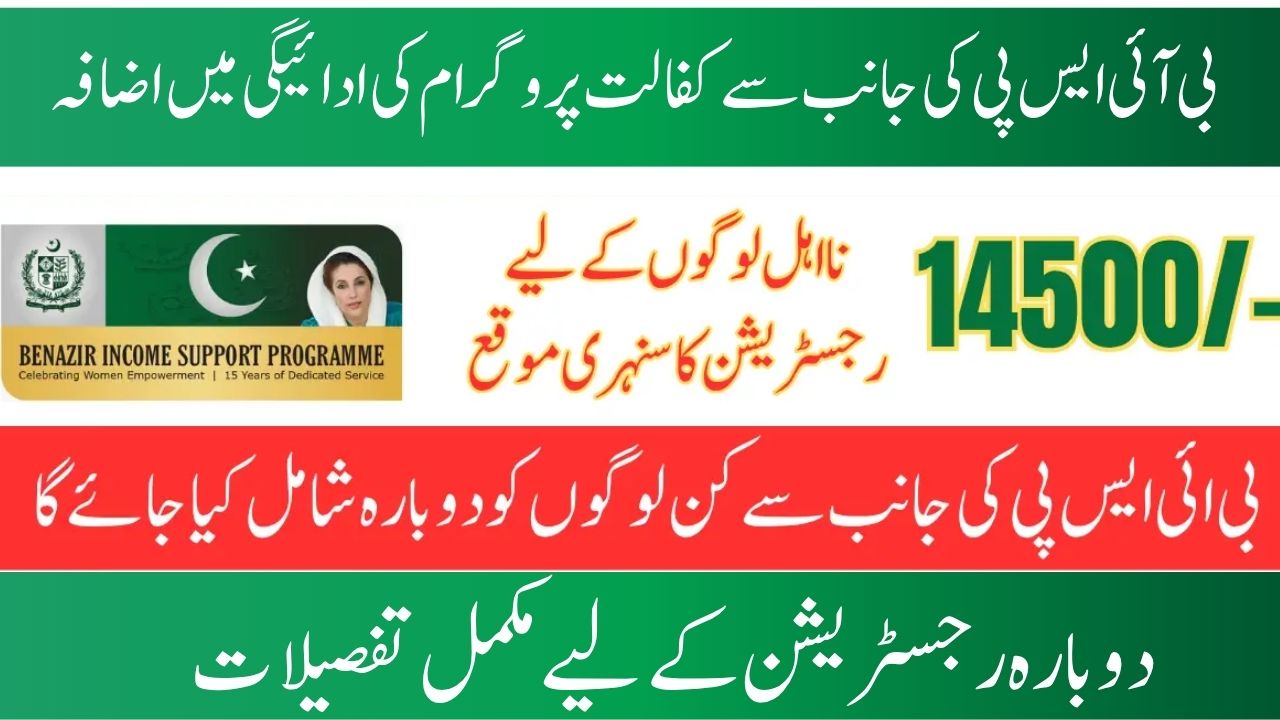
BISP Extends the Kafalat Initiative
With the goal of raising the quarterly payout from Rs13,500 to Rs14,500 starting in January 2026, the Pakistani government is getting ready to extend the Kafalat program. The goal of this action is to protect low-income families’ purchasing power from growing inflation. In order to increase the program’s impact and reach nationwide, the government intends to add additional eligible women.
More women will be included in the Rs. 13,500 BISP payout. The government’s efforts to improve impoverished households through targeted financial support have been recognized by the IMF, which has emphasized the need to modify the Kafalat stipend to keep up with inflation and progressively improve its generosity in comparison to international norms.
You can read more: All Registered Women’s BISP June 2025 Payment Check Eligibility Status By CNIC Details
Present Situation of the BISP Kafalat Initiative
The BISP Kafalat Program, Pakistan’s top social security program, provides quarterly unconditional cash transfers (UCT) to the most vulnerable women in the nation. For the preceding 12 months, the government raised the quarterly distribution from Rs10,500 to Rs13,500 in order to better support low-income people and account for inflation. Approximately 10 million families already get this benefit, and 700,000 more were added in the current fiscal year.
This project is crucial in helping moms pay for basic needs including food, health care, and their children’s education. The goal has always been to provide financial support in an open, respectful, and truthful way.
Budget 2025–2026 Proposed Increase to Rs14,500
2025-26 Federal Budget Proposal: Increase Kafalat Quarterly Payment
• Proposal to increase Kafalat quarterly payment by 20% from Rs13,500 to Rs14,500.
• Implementation expected by January 2026, subject to approval.
• Reason: Inflation adjustment and improved coverage.
• Increase aims to preserve cash assistance value amid rising prices.
• IMF sees inflation-linked updates as necessary for BISP effectiveness.
| Category | Details |
|---|---|
| Current Quarterly Payment | Rs13,500 |
| Proposed Payment (from Jan 2026) | Rs14,500 (20% increase) |
| Reason for Increase | Inflation adjustment and preserving real value of assistance |
| Total Beneficiaries (2024–25) | 10 million households |
| New Beneficiaries Added | 700,000 in the current fiscal year |
| Future Expansion Plan | More women to be included based on HIES data |
| Payment Access Improvements | Bank accounts, ATM access, branchless banking, and digital payments |
| IMF Recommendations | Inflation-linked payments, wider coverage, tech-enabled transparency |
| Target Impact | Poverty reduction, better financial inclusion, improved social stability |
The Function of the IMF and Its Suggestions for BISP
IMF’s Review on Pakistan’s Social Welfare Schemes
• Highlights effective execution of BISP budget for 2024-25.
• Urges inflation-adjusted increases in Kafalat benefits.
• Advocates for further beneficiary coverage expansion.
• Advocates for transparent, technology-backed payment systems.
• Calls for a gradual increase in BISP payments’ generosity level from 12.4% to 15%.
Increased Participation of Women in the BISP Kafalat Program
Pakistan’s BISP Expansion Plan
• The government plans to increase deserving women in the program in the 2025-26 fiscal year.
• Expansion based on Household Integrated Economic Survey (HIES) data.
• Benefits include increased financial aid access for women in remote areas, protection for families affected by inflation and unemployment, and improved social stability and economic inclusion.
• Expansion aims to target support more accurately and improve program transparency and fairness.
Enhancement of the BISP Payment Program
BISP Payment System Upgrade
• Beneficiaries now have full mandate bank accounts and access to a wider range of banks.
• Fund withdrawals via ATMs and branchless banking.
• Increased financial control and transparency.
• Reduced fraud risks.
• Provides women greater financial freedom and dignity.
• Minimizes risk of mismanagement or delay with digital payment channels.
Anticipated Effects of the BISP Reforms in 2025–2026
BISP Reforms for Poverty Reduction
• Increased financial security for 10+ million families.
• Increased real value of quarterly cash payments.
• Wider inclusion of women from the lowest income groups.
• Improved transparency and faster disbursements via digital banking.
• Shift towards global best practices for financial adequacy and system efficiency.
You can read more: CNIC’s Online Check for the BISP New Payment Increase 2025 via the 8171 Portal
In conclusion,
The government’s strong commitment to safeguarding Pakistan’s most disadvantaged people is demonstrated by the anticipated increase in the BISP Kafalat quarterly payment to Rs14,500 and the aim to include additional women beneficiaries in the 2025–26 budget. The future of BISP appears to be more secure, effective, and inclusive than ever before, thanks to the IMF’s proposals and enhanced digital infrastructure.
For millions of women who depend on this crucial help to ensure the survival of their families, this development offers a ray of hope. The message is obvious as we await the formal budget announcement: assistance for the impoverished is not only ongoing but is becoming more robust.

FAQs
1. What is the new payment amount for BISP Kafalat, and when will it begin?
The planned rise in the quarterly payout from Rs13,500 to Rs14,500 is anticipated to take effect by January 2026, subject to approval of the government budget.
2. To whom will the program’s growth be advantageous?
In order to improve social protection and financial inclusion, the expansion primarily targets more worthy women, especially those from rural and economically underdeveloped regions.
3. How will the new method of payment operate?
Funds will be sent to beneficiaries’ bank accounts, enabling branchless banking and ATM withdrawals. With fewer chances of fraud or delays, this digital update guarantees quicker, safer, and more transparent payouts.