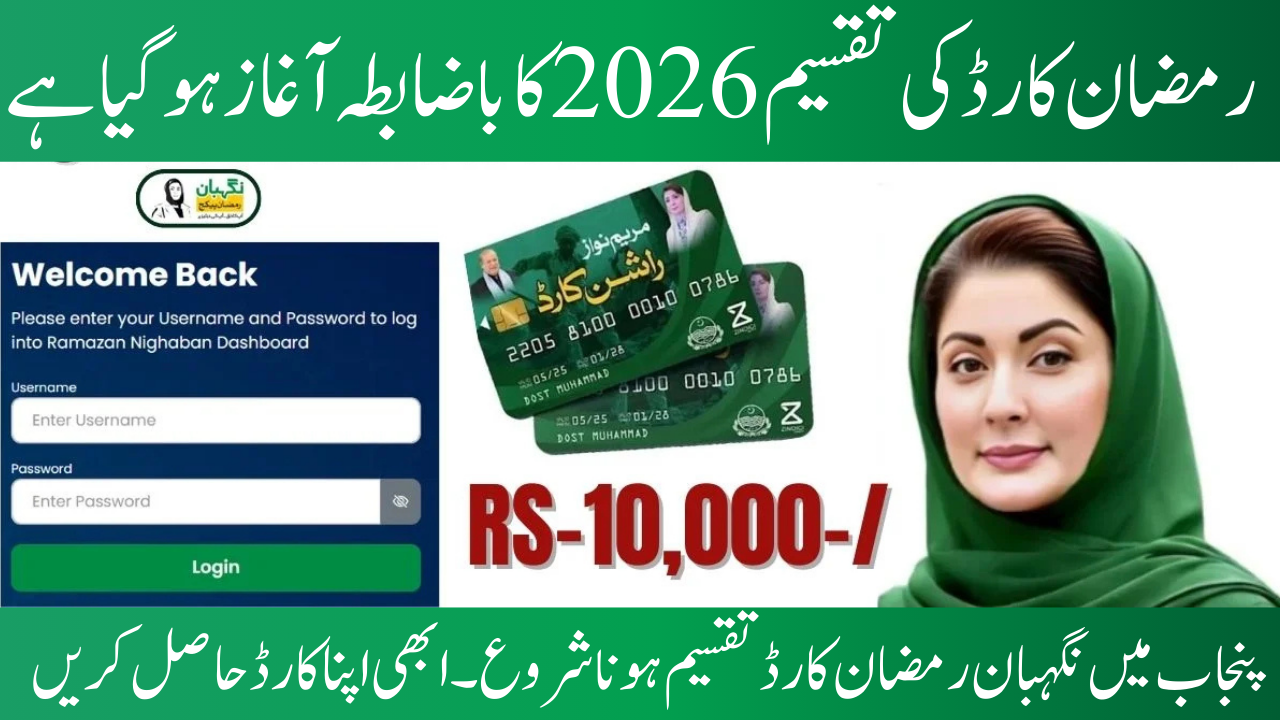
Nighaban Ramadan Card Distribution
The Nighaban Ramadan Card Distribution 2026 has officially commenced across Punjab to provide timely relief to low-income and deserving families before the holy month of Ramadan. This initiative, launched by the Government of Punjab, aims to reduce the financial burden on vulnerable households by offering subsidized essential food items. As inflation and rising food prices continue to affect daily wage earners and economically disadvantaged communities, this structured welfare program ensures that families can observe Ramadan with dignity and peace of mind.
You Can Also Read: 8070 Web Portal Login Guide: Verify Status & Submit an Online Application
The program is implemented in coordination with national welfare initiatives such as the Benazir Income Support Programme and the Ehsaas Program. Through data integration and verified beneficiary records, the authorities aim to ensure transparency, fairness, and efficient delivery of assistance across all districts of Punjab.
Program Overview
The Nighaban Ramadan Card is designed as a structured subsidy mechanism rather than a temporary or unorganized distribution drive. Eligible families receive a Ramadan Card that allows them to collect subsidized rashan from designated distribution centers. This system eliminates long queues, reduces uncertainty, and ensures that assistance reaches the right beneficiaries without duplication.
You Can Also Read: NSER Survey Registration is Now Open for Previously Ineligible Individuals
Below is a summary of the key features of the program:
| Feature | Details |
|---|---|
| Program Name | Nighaban Ramadan Card Distribution 2026 |
| Coverage Area | All districts of Punjab |
| Purpose | Provide subsidized food during Ramadan |
| Target Beneficiaries | Low-income and deserving families |
| Distribution Method | Verified Ramadan Card issuance |
| Linked Programs | BISP and Ehsaas integration |
| Registration Type | Punjab Social Welfare Registration |
| Benefit Type | Subsidized Rashan Package |
| Expected Start Date | Mid-February 2026 |
Expected Distribution Timeline
According to official updates, the distribution process is expected to begin in mid-February 2026. Cards are likely to be delivered between 17 and 18 February to ensure families receive assistance before Ramadan begins. Distribution is being conducted through a structured administrative system to guarantee timely support.
Importance of the Program
Ramadan often brings additional financial pressure on households, particularly those already struggling with rising food costs. Families must prepare daily meals for Sehri and Iftar, which increases grocery expenses. The Nighaban Ramadan Card Distribution plays a vital role in reducing this burden.
The program is significant because:
-
It ensures food security for vulnerable families during Ramadan.
-
It strengthens transparency and accountability in welfare distribution.
By replacing informal aid distribution methods with a verified and organized system, the initiative promotes dignity and fairness while preventing misuse of resources.
What Is the Nighaban Ramadan Card?
The Nighaban Ramadan Card is a government-issued facilitation card provided to eligible households. It allows beneficiaries to collect essential food items at subsidized rates from authorized centers. Instead of distributing cash randomly, the government has introduced a controlled subsidy model that ensures assistance reaches verified families only.
This structured approach enhances predictability, efficiency, and accountability within the welfare system.
Objectives of the Program
The Ramadan Card Distribution initiative has been developed with clear social and economic goals:
-
Support low-income families during Ramadan.
-
Provide access to essential food items at subsidized rates.
-
Improve transparency in welfare delivery systems.
-
Prevent duplication through verified beneficiary data.
-
Strengthen coordination between provincial and national programs.
-
Ensure fair distribution in both urban and rural areas of Punjab.
Eligibility Criteria
To ensure fairness, the authorities have established clear eligibility guidelines. Applicants may qualify if they:
-
Belong to a low-income household.
-
Are already registered in welfare databases.
-
Are widows, senior citizens, or daily wage earners.
-
Do not hold a government job.
-
Successfully complete verification during registration.
Accurate and truthful information is essential during the application process to avoid delays or disqualification.
You Can Also Read: PM Ramzan Package 13000 Launched for Ramadan 2026—12.1 Million Families to Get Cash Aid
Distribution Process
The program follows a structured and transparent procedure:
1. Data Verification
Authorities review existing welfare records to identify eligible households.
2. Registration Confirmation
Families not already listed must complete Punjab Social Welfare Ramadan Card registration.
3. Card Issuance
Approved applicants receive their Ramadan Cards through local administrative offices or facilitation centers.
4. Collection of Subsidized Items
Cardholders collect essential groceries from designated distribution points under the Punjab Ramadan subsidy scheme.
Items Included in the Ramadan Package
The relief package typically includes essential food items required throughout Ramadan:
-
Wheat flour (atta)
-
Rice
-
Sugar
-
Cooking oil or ghee
-
Pulses (daal)
-
Tea and other basic kitchen necessities
These items ensure that families can prepare daily meals without severe financial strain.
Online Registration Process
New applicants may apply online through the official Punjab government portal by following these steps:
-
Visit the official registration website.
-
Create an account using your CNIC and registered mobile number.
-
Enter household and income details.
-
Upload required documents (if requested).
-
Submit the application.
-
Wait for verification and SMS confirmation.
-
Collect the Ramadan Card from the designated center upon approval.
Important reminders:
-
Registration is completely free.
-
Do not share your CNIC with unauthorized agents.
-
Use only official government platforms.
Common Mistakes to Avoid
Applications may be delayed due to avoidable errors such as:
-
Providing incorrect or outdated personal information.
-
Submitting incomplete household details.
-
Applying multiple times unnecessarily.
-
Ignoring official SMS notifications.
-
Using unofficial registration agents.
Careful submission of accurate information ensures faster approval.
Community Impact
Beyond financial relief, the program promotes social stability and public trust. Organized distribution reduces panic buying and ensures smooth supply chain management. It reflects a shift toward structured social protection policies rather than temporary or informal relief measures.
By integrating verified national welfare data, the Punjab government has improved targeting accuracy and administrative efficiency. Such initiatives demonstrate a commitment to long-term poverty alleviation and food security.
Conclusion
The Nighaban Ramadan Card Distribution 2026 represents a structured and transparent welfare initiative aimed at supporting vulnerable families across Punjab. By integrating verified data systems and issuing Ramadan Cards, the program ensures that subsidized food reaches deserving households efficiently and fairly. With clear eligibility guidelines, organized distribution, and essential grocery support, the initiative reduces financial pressure during Ramadan. As economic challenges persist, such targeted relief programs strengthen food security, promote dignity, and reinforce a more accountable and responsive social protection system for communities in need.
You Can Also Read: Punjab Green Tractor Scheme 2026: Draw Results and Subsidy Details
FAQs
1. What is the Nighaban Ramadan Card?
It is a government-issued relief card that enables eligible families to receive subsidized essential food items during Ramadan.
2. Who is eligible for the program?
Low-income households, daily wage earners, widows, senior citizens, unemployed individuals, and families already registered in welfare databases may qualify, subject to verification.
3. Is there any fee for registration?
No. The registration and approval process is completely free. Applicants should avoid paying any agent or third party.